

free webinar for postdocs: Sep 22

Why research presentations are like music
10+ Years, 500+ Workshops & 10,000+ Researchers Trained

Someone asked me last week for advice presenting their research as if there is a general answer to that question. But that's like asking someone for help composing a song without telling them whether your intended outcome is rock 'n roll or jazz. It just doesn't work.
Back to the research question, in my experience we can easily identify 5 common genres of research presentations that PhDs and postdocs will likely encounter. While for each there are often sub-gerres and other exist (classrom lectures), these 5 are a good place to start.
Within Academia:
research conference talks
dissertation and other defenses
Job Talks
Beyond Academia:
research talks to public audiences
pitches (grant, policy and start-ups)
Below you'll find a video where I talk about each one as well some text and visuals exploring them deeper. These video lessons serve as the entry for students using The 5 Steps Process to PresentBetter that I've developed from working with thousands of researchers helping them develop effective talks. For more on the program, click here.
PS If you came looking for the 5 talk type with 3 key takeaways infographic, scroll all the way to the end for a high resolution downloadable version.
Before we get started on each genre, here is the preamble video.
It's a reminder: research presentation space is diverse. It's the reason these different talk type videos are needed: to create the custom framing for the rest of resources in the digital platform.
WITHIN ACADEMIA
Presenting at conferences
Following is the additional information I include as part of The PresentBetter Program.
There are 2 areas of pre-talk prep focus that will ensure you develop a more effective talk before you even begin developing it.
The first is honing in on a purpose beyond just sharing your research. Remember what you are doing is sharing your research but why you are doing it is an entirely different matter. Answering why will help transform it from a generic research presentation that likely gets lost in the a sea of others to a strategic talk that gets remembered and accomplishes a specific goal.
Ideally these goals are tangible in nature. Examples include:
Teaching the audience something new that shifts how they think or do something in their own work. This could be done by highlighting a result that disproves or shifts a previous understanding or sharing a novel methodology that improves a process.
Invitations for collaboration on future work. This could come by highlighting the future work that now needs to be done and the needs beyond your lab that make collaboration on that future work a win-win for others to join with you.
Increasing professional reputation through journal article downloads and citation count increases. This could be done by being specific about the importance of this work, where to find it, and what is critical for people to be citing about it for their next paper.
Opening professional doors for your next career step. For this think about whether your next step is within the specific field, an adjacent field or a move to industry and how do you weave your own story and your own career plans into this research sharing moment so that you've demonstrated your skills and the audience has sense for what you want to do next.
And remember, this work is usually subtle. These talks are not explicit pitches about any of these things. But having a tangible purpose help guide your talk development process will help increase the focus of your talk and help animate it in a way that makes it substantially better than just "sharing my research."
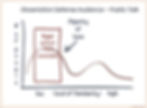
The second consideration is to think deeply about the bimodal nature of these audiences and how different parts of your talk will resonate with different groups. Don't be afraid to go super technical when targeting people familiar with your field but also don't forget there is a big segment of the audience that needs a more general, accessible understanding as well.


And remember this is an oscillating back and forth. It's not a part a and part b. If you bifurcate as part a and part b then the other audience segment will tune out for long periods. If you organically weave back and forth, the more general understandings will remind the more familiar people about the importance of the work and the more technical understandings will teach the less familiar people something they didn't know. Both groups benefit from you talking to the other and, as long as you are not stuck in one place for too long, neither group will tune out.
Dissertation defence
Below is the additional information I include as part of The PresentBetter Program.
Dissertation defenses vary widely from university to university and even within the same university so it's important you go watch some in your department at your university. Aim to attend 3 all 4-6 months before yours will be scheduled. This will give you a good perspective on how they are run in your department with enough lead time for you to process the learning, ask questions, and plan accordingly.
In the video, I talk about one major difference that exists: is it a public talk that the examiners watch and evaluate based on your ability to speak to a general audience OR is it an oral exam where the target audience is the examiners and outsiders are invited simply as observers.
If the the latter is the case, it is really an oral exam for people already with inside knowledge, bear in mind in the content videos that this is an exceptional case. While a 40 word summary will still have value, it does not have the same kind of necessity. Connection too will play out differently as your audience already has insider information about your research.

Another aspect of the dissertation defense that is quite different from other talks is the importance of the question period. In most
PhD defenses, assuming you have done an adequate job with the presentation itself, the question period is really the determining part. Especially in this age of increasing AI, the question period is where examiners can stress test your knowledge. And you need to prepare.
Ironically this is one area where AI can be particularly helpful. Be sure to do at least several sessions with the Q&A AI agent I've built into this program. These sessions will provide you with a written transcript of both questions and your answers. This will prove to be a helpful document to then review with a trusted member of your dissertation committee or other mentor. Ask them what else they think you should have included in your answer and what questions an external examiner might ask that they did not see asked by the AI agent.
Also, there is 1 important mindset piece that I did not mention in the video. Often the dissertation defense is really less of an oral exam and more of a celebration of your accomplishments. Ideally you would not be allowed to schedule your defense unless everyone was confident you are ready and will pass. Remember, most examiners want to see you do well. Yes it is a test of your PhD research, but it is also often just as much, a celebration of your journey. To the extent possible, enjoy it!
Job Talks
Here are the key takeaways:
Design your talk in thirds:

The big picture of your research, not only the impact you've already had but the impact you will have.
The details of your research. A deep dive into the complexity that will demonstrate your depth of expertise to the people in the room who are in your field.
Your personal story. People need to feel like they know you and can trust you and that you'll be a good colleague.
But remember, the talk needs to flow naturally. Different segments of your talk will have different tones and a different feel. One postdoc I worked segmented sections by delivering pieces of his personal story from one side of his slides and research from the other. But remember: these moves need to feel natural not performative. Keep reading...
While designing in thirds is a good idea, delivering in thirds is a terrible one. The talk should flow naturally from general to specific with a bit of personal story back to general back to more about you with a dive to specific and return to general.... you get the idea.
By the end, the goal is to cover this terrain but it is a natural weaving back and forth and in between that makes the talk feel like a natural conversation about the work you've done and the person you are and allows us to see and feel the work you'll do next and the ways in which you'll do it.
There's more art than science to these types of talks. As you move through The PresentBetter Program pay special attention to a few particularly key modules:
Credibility. Developing a deep understanding of how audiences triangulate credibility is particularly important. And remember the job talk is only 1 event in your interview. Everything else counts too.
Depending on the length of the Q&A time, the Zoom interface may prove very helpful. It's in the 3rd visual module.
Your delivery will matter. Academic positions come with the expectation that you are ready to be at the front of the room. You need people to know you are capable of having a strong, confident presence--even if you're a bit nervous at this particular moment.
Good luck. It's competitive, but the fact you are being asked to give a job talk means you are an exceptional candidate. Try your best to smile and relax a bit. You got this.
BEYOND ACADEMIA
Presenting Beyond Academia
Here are the key takeaways:
When you're preparing a research talk beyond academia, prioritise:
Communicating the emotional value of your work. Tell us what the stakes are from the beginning, using specific examples. Focus on a person or group of people who could benefit from your project.
Presenting your research with clear, accessible language. Even though the audience doesn't share your expertise, they can still connect with your work if you provide straightforward, high-level explanations.

And a link to a blog post to not only Atia's talk but also why it worked so well.
Pitches: grants, policy, and research-based start-ups
Below is the additional information I include as part of The PresentBetter Program.
The key to winning oral pitches is relationship building. People invest in people.
There are way more investable ideas than there is money. Establishing belief in the people doing the work and their capacity to get it done is what winning pitches do exceptionally well.
The stories you need to develop are designed to demonstrate why you are the right person and establish the value of your idea.
The call to action is one part of demonstrating you know how to get it done.


Some keys to pay extra attention to as you move through the program resources.
The clear, accessible, 40-word description is key to everything else. When you get this right, it becomes the story about your project that other people can retell when you are not in the room. And that's key. To be successful, you need champions, and those champions need to be confident they can articulate both what you are doing and the value of what you are doing. That summary you will develop is what they need to be able to remember.
When we get to slides, I'll talk first about how most researchers are too dependent on them. Heed that lesson, even if you don't think it's true. You need to be able to pitch without visuals; in fact you likely will be asked to. Remember the slides you build for people to review beforehand or for people to keep after are really a written proposal in slide format. But those aren't the ones you should use when you present, and you may find you don't need any at all.
In the delivery space, the guardrails are different. Yes, there is a need to be professional, but there is an even bigger need for us to hear your passion and drive and belief in this project. If you want us to invest in you and your project, we need to feel the depth of your commitment to seeing it through to the finish. Voice and body language say more than words ever will.
And for those looking to download the summary infographic with all 5 talk types and 3 keys for each one, here it is:


The PresentBetter Newsletter
Where research based, experience proven strategies help improve your clarity and impact.
For Supervisors - Equip your research team with advanced presentation skills, ensuring they represent your lab’s excellence whenever they speak.
For Researchers - Maximize every talk, thesis defense, or keynote—so your work gains the recognition, interest and support it deserves.